Workplace Bullying of Nurses
http://www.usnewsuniversitydirectory.com/articles/bullying-a-rising-concern-for-new-nurses_14282.aspx#.VAlFO1Plx3t
Bullying a Rising Concern for New Nurses
By Rebecca Strong
Posted September 03, 2014 02:00 PM

Bullying is a rising concern for new nurses.For new nurses, a supportive, low-stress work environment is absolutely crucial to ensuring their success. Their first year of practice is a time for acquiring essential skills, building on their practical knowledge and boosting their confidence. Unfortunately, their vulnerability puts them at risk for bullying, an increasingly prevalent threat that could compromise those developmental opportunities.
Rising Worries
A new survey of over 2,000 nursing school graduates from the class of 2014 from Kaplan Test Prep revealed that this issue is breeding fear. A staggering 48% of participants admitted they are concerned about being the victims of workplace bullying or working in a hostile environment, according to the press release. This finding should come as no surprise considering 39% of those who answered the survey knew nurses who had experienced these conditions.
Another study in American Nurse Today revealed that roughly 60% of nurses left their first job in just six months due to bullying or a hostile work environment. Medical providers then suffer the consequences: Related research published in The Online Journal of Issues in Nursing showed that this can cost them from $22,000 to $64,4000 or more per turnover.
Susan Sanders, DNP, RN, NEA-BC and vice president of nursing, Kaplan Test Prep, commented on this “disturbing dynamic” in the press release.
“Changing cultural norms within the nursing profession will require efforts from all parties: from nursing graduates, in treating their colleagues with respect and raising awareness by reporting incidents; from nursing leaders, in leading by example to foster supportive behaviors and promote a healthy work environment; from health care institutions, in setting zero tolerance disciplinary policies and empowering staff to report on issues without fear of retaliation; and from academic institutions, in preparing students with conflict management skills to address situations as they arise,” Sanders said.
Bullying can have a significantly negative impact on not only the nurses themselves, but also the institutions in which they work. Victims’ feelings of isolation, incompetence and inferiority can often compromise their ability to provide optimal patient care. Not to mention, stress can lead to some detrimental problems, such as anxiety, depression and insomnia. As nurses’ morale and job satisfaction slowly declines in response to bullying, institutions have to deal with the harsh financial reality of higher absenteeism and turnover rates.
Addressing the Issue
So how can health care organizations end the abuse? American Nurse Today recommended that hospitals establish and aggressively communicate zero-tolerance policies for bullying, and ensure full support from upper administration. Meanwhile, a whopping 79% of nursing school graduates believe nursing schools should offer workshops and special training sessions on handling workplace bullying and hostile work environments, according to Kaplan’s survey.
Valerie Palarski, adjunct nursing faculty for Rasmussen College Online, explained in an interview on the school’s blog that she also believes medical schools need to take some responsibility for properly preparing nurses to dodge bullying. She explained that students are only set up for success if they have effective communication and coping skills that can allow them to remain composed in a high-stakes environment.
Kaplan is currently surveying nursing school and medical school administrators in hopes of gaining deeper insight into this issue, which will be revealed later this year.
Silence is the Residue of Fear
It is important to foster cultures of openness. Silence is the residue of fear. Bullying can only thrive in silence. It is important that people connect to conscience and to speak up when situations prove dangerous to others.
Here is an inspiring TED talk. May it inspire you to encourage truthfulness as work. That of course is the core of our democracy and leads to harmony at work and successful businesses.
Bullying of Robin Williams’ Daughter
I saw this article about the bullying of Robin Williams daughter. Bullying in truth is repeated negative behaviour that causes psychological injury causing a risk to health and safety. The tweet that caught my attention was this one…
One tweet, calling 25-year-old Zelda Williams a “heartless b****” was retweeted 25 times.
That is definitely bullying. The person could have a mental illness, I would suspect they do. Very painful for Zelda.
We have so much work to do on building empathy and compassion in our world. Peace is not a fluffy statement it is the very foundation of our lives. Until we really connect to our emotions we will live lives of empty desperation. The depression that we see these days is the suppression of emotion, we believe that emotions are a weakness, yet they are the channels to freedom (free dominion).
I feel forgiveness for those who do not understand the depth of others. For they must be in a space where they can’t feel themselves. I send love to Robin Williams daughter. It is an agonising time for her.
There is much work to be done on bullying.
http://www.thewire.com/technology/2014/08/twitter-to-crack-down-on-trolls-after-robin-williams-daughter-bullied-off-network/376059/
Twitter Will Crack Down on Trolls After Robin Williams’ Daughter Was Bullied Off Network
Shirley Li8,096 views
 REUTERS/Fred Prouser
Days after Robin Williams’ death, his daughter received gruesome messages from anonymous users, including photoshopped pictures showing bruises around her father’s neck and tweets accusing her of his suicide.
Two users, @PimpStory and @MrGoosebuster (both have been suspended since the incident), tweeted manipulated images of Williams in a morgue, accompanied by messaged like “look at what he … did to himself because of you.” One tweet, calling 25-year-old Zelda Williams a “heartless b****” was retweeted 25 times.
The barrage of bullying drove her offline early Wednesday. She tweeted her exit…
…and released a statement on Instagram:
On Thursday, Twitter Vice President of Trust and Safety Del Harvey released a statement on the matter, saying the company will be updating its security policies:
We will not tolerate abuse of this nature on Twitter. We have suspended a number of accounts related to this issue for violating our rules and we are in the process of evaluating how we can further improve our policies to better handle tragic situations like this one. This includes expanding our policies regarding self-harm and private information, and improving support for family members of deceased users.
It’s a step in the right direction, but Twitter’s policies may not be enough to stem the flow of trolls that abuse users across the board. The abuse doesn’t just take the form of inappropriate or mean comments—trolls will create account after account, so the victim has to repeatedly block them. It’s not a minor nuisance—it’s harassment.
Twitter’s current system allows users to report abuse, document harassment, and eventually get bad accounts taken down. But it’s a boilerplate method, says media critic and feminist activist Soraya Chemaly, and it’s unfortunate that only a high-profile incident like Williams’ can change Twitter.
“While I am truly sorry for what the Williams family is experiencing during this time, I am concerned that it takes an event like this to bring heightened attention to a problem that so many face every day,” she told The Washington Post.
Twitter’s page for online abuse links to a form for reporting abusers, and also provides guidelines to what to do about the abuse.

In the case of Zelda Williams, who deleted her Twitter and Instagram profiles, her followers—numbering a combined 280,000 through her Twitter, Instagram, and Tumblr—immediately flooded her feed with messages of support.
Others do not have such influence. As The Daily Beast’s Tauriq Moosa wrote in a column chastising flimsy online abuse policies:
Zelda Williams received horrific messages and has left social media indefinitely. She’s not the first, and she won’t be the last. Women give up entirely or don’t tackle topics that mean a lot to them because they are unable to, due to the volume of angry men threatening them with violence and rape. On and on it goes. There will be another woman like Williams tomorrow, only most of us won’t know.
The non-social media online community has been taking steps to curb abusive activity. In particular, gaming companies have assembled strategies to encourage players themselves to monitor other players. League of Legends, which has more than 67 million active players each month, uses a “player behavior team” of psychology, cognitive science, and neuroscience experts to study how harassment works, and as a result, came up with and implemented reforms.
These techniques included turning off the chat function, and having players manually turn them on if they wanted. This way, players didn’t just have an automatic platform for saying negative things. Instead, they would have to first turn on chat, therefore increasing positive chats instead of spur-of-the-moment negative ones.
In essence, it’s a strategy that promotes the old adage to “think before you speak,” and it’s one Twitter and social media outlets could pursue further. If users thought before tweeting, mindless online harassment might just be overcome.
My Father’s Suicide
Suicide and workplace bullying
28 Jun 2012
 Carolyn Malkin
Email: c.malkin@latrobe.edu.au
This was originally published in The Conversation Wednesday 27 June, 2012
Submissions close this week for the government-ordered parliamentary inquiry into workplace bullying. The committee has been asked to investigate the prevalence of workplace bullying and asses whether existing regulations sufficiently deter potential bullies.
Few states and territories have a legal deterrent. But last year Victoria amended its Crimes Act to include bulling and cyber-bullying, making it a crime in Victoria to bully a co-worker, or any person, to their death.
Also known as “Brodie’s Law”, this is the legacy of Brodie Panlock, a 19-year-old waitress who committed suicide in 2006 after a vicious and sustained campaign of bullying by four male co-workers at a Melbourne café. Brodie’s father, Damian Panlock, has publicly said, “If this law had existed then (when Brodie was victimised), the vultures who caused our daughter’s death would be in jail.”
It’s hoped the parliamentary review will recommend similar laws be adopted in other states and territories to protect all Australians from workplace bullying.
Last month, it was 30 years since my father committed suicide at work. I was then 13 years of age. Bullying someone to death was not a crime in 1982, yet it felt like it to me and those who loved my father. So I see new government action as a significant event in our history. In addition to occupational health and safety implications, it is also of some comfort and validation to those who, like me, have lost loved ones to suicide due to workplace bullying.
Walter (Wally) Archibald Theodore was originally a printer – a “hand compositor” with an extremely high level of literacy. Born in 1935 to a poor family, he left school as a teenager to support the family when his father died, his dreams of educational advancement and sporting talent set aside for duty and survival.
I remember watching Dad at work setting type so swiftly it seemed I couldn’t see his hands move. If a mistake went to print, he believed it was his fault, not the editor’s. He would drill his kids on speech, grammar, and spelling. I was nine when he asked me if I knew what an ombudsman was; he’d grumble when newsreaders said Princess Highway instead of Princes.
But he was also extremely sensitive – and funny. Short but muscular and hairy, he did a superb gorilla impression, swinging from rafters. He gave great shoulder-rides to bed. We would sit side-by-side watching The Two Ronnies. He was a “bushy” and loved Walkerville and Cape Liptrap in South Gippsland. His nickname was Wally Wombat.
Wally was made redundant by advances in printing technology. Even as a child I could see this was a great disappointment for him. I suggested he buy an old printing press and do wedding invitations in the garage. Eventually he became an armed guard of what I used to call a “money truck”.
He enjoyed the friendships he made at work, was generally liked, and took on the role of union representative. But Dad was unable to prevent the termination of a member caught with his hand in the till. A process of harassment began by some people at work, which included evening telephone calls to our home.
On May 7 1982, the last day of term, I played lacrosse in the morning. That afternoon, I received my best school report to date. I planned to hug him and tell him I loved him when I got home that night. Wally rang mum in the morning to tell her he had visited another depot where someone had snidely remarked “I hear you’ve got a pretty ordinary union rep over there”. Dad replied, “That’s me!”
For a sensitive person, this pain, rejection, depression – whatever it was – was enough to cause him to put his company-issued pistol to his head and fire. He did this despite a wife and family who loved him. My mother was bereft, faced with raising two teenage children alone, and a future without the man she loved. They planned to travel Australia in a caravan when he retired, but they would never become one of the grey nomads.
In the years after my father’s death, walking home from school, I would sometimes approach armoured trucks. I would defiantly tell the occupants I was Wally Theodore’s daughter, just to see their faces. I hoped one day I would see who did this to our family. I was certain I would know them by their eyes. Instead, I just saw kindly middle-aged men, discomfited by a tiny traumatised schoolgirl, daring them to return her accusing stare.
I still don’t know the names of my father’s “vultures”. Thirty years on, a middle-aged adult, I still occasionally freeze; I’m a young girl again who cannot comprehend what happened to her Dad.
The amendments to the Crimes Act, or “Brodie’s Law”, include situations where someone intends their victim to experience “mental harm” (s.21A(8), which encompasses suicidal thoughts and self-harm. Although the changes relate to this behaviour in any context, the occupational health and safety connotations are obvious.
In workplaces now, we often attend anti-bullying classes. Our attendance is recorded on our personnel file. It would be irredeemably cynical to suggest this is purely legal protection against vicarious liability for employers, who, accused of failing to provide a safe workplace, might argue “it’s not our fault. We told them not to bully their co-workers”.
So I hope that through Victoria’s new laws and by now extending this debate nationally, legislative change will reflect serious acknowledgement by employers that bullying can be every bit as dangerous in a workplace as a rickety scaffold.
Carolyn Malkin is Executive Officer, Curriculm Bridges Project at La Trobe University
Amanda Gore: 6 Ways to Increase Your Joy
Amanda Gore is wise in promoting joy in workplaces. This is the very foundation for workplace harmony. When people feel inadequate, jealous or competitive it can develop into undermining behaviour which can escalate into bullying. Thus, if people stop comparing and start celebrating the success of others, even help them with their success, they may be surprised to find great things come their way. It is in building our collective success that we all succeed. Joy is the centrepiece of happy functional workplaces.
6 Ways To Increase Your Joy

No matter how you look at it, comparisons will ruin your joy!Comparison is the cousin of judgment. It serves no purpose other than to make you feel discontented with what you have. STOP IT!
Here are 6 ways to increase your joy:
1. STOP comparing how you look with how others look.
2. STOP comparing your work with what others do.
3. STOP comparing your possessions with what others have.
4. STOP comparing how many friends you have compared to others.
5. STOP comparing how the boss treats you and others.
6. STOP comparing your circumstances and the apparent circumstances of others.
Instead, find gratitude for everything you have and everyone in your life. And, everything you don’t have – there is a reason for it!
When you choose gratitude over comparison – life changes!
Begin today.
Zooties! – Amanda
For more tips on how to increase your joy visit amandagore.com
Successful Leaders Create Joyful Workplaces
Successful Leaders Do These Three Things

Being a leader means working with humans (in the most part!), and humans operate on the fuel of feelings. A leader with a high EQ (emotional intelligence), will foster a workplace where people can feel good about themselves and therefore be more engaged with their work. In a nutshell, people who feel good about themselves will do a better job! Take a look at this quote below:
“The data indicate that workplaces with engaged employees, on average, do a better job of keeping employees, satisfying customers, and being financially productive and profitable. Workplace well-being and performance are not independent. Rather, they are complimentary and dependent components of a financially and psychologically healthy workplace.” Well-being in the Workplace and it’s Relationship to Business Outcomes – Gallup
So how do you become a great leader? A successful leaders job is to these three things:
1. Help people change behavior
2. Create and environment where people can be the best they can be
3. Help people believe in themselves
1. Help People Change Behavior
We CAN change our behavior, but the first reaction people usually have when faced with change is fear. As a leader you need to understand that. To help people face their fear you need to re-frame change in a way that people see it as an opportunity for growth and development. People want to grow and develop, even if they are not conscious of it. They will feel that you care about them when you give them opportunities to do so. For more on change see my post on FARCing.
2. Create an Environment Where People can be the Best They Can Be
This means creating an environment where people are free from fear and have the opportunity to experience joy. The Merriam-Webster Dictionary describes joy as:
“the emotion evoked by well-being, success, or good fortune or by the prospect of possessing what one desires”
…what we all desire is to feel good about ourselves – Joy is the new competitive advantage! To help people have a joyful work experience you must provide people have a sense of purpose and a sense of belonging. Model that it is okay to laugh and that it is okay to make mistakes! For more on creating a joyful work environment take a look at 15 Ways to Create Joy Spots at Work
Leaders that use fear to motivate are actually hindering production. When was the last time you made a meaningful decision when you were under stress or fear?
3. Help People Believe in Themselves
Think about the best boss you every had. Why were they the best boss? Chances are it was because they made you feel good about yourself. So, what can you do to help others believe in themselves? The most important thing you can do is simply to believe in them and let them know it…and to give them the opportunity to shine.
Remember you are leading humans, and humans have feelings! Remember that staff who feel good about themselves will WANT to grow and develop and be the best they can be. If you as a leader can inspire this you will have a more productive, successful, creative, engaged and enthusiastic team!
Zooties, Amanda Gore
Connection at work is Critical to Business
This is from the wonderful Amanda Gore.
Connection: Why it is Critical to Business

Emotional intelligence is all about being connected. Connection is the key to all life let alone business – because it creates feelings. And feelings are at the core of ALL successful businesses – whether it is sales, customer service, leadership, teams or anything else!
Why is connection important?
Being connected not only helps you live longer and healthier lives but it improves business. Customers come back when they feel a special connection with your team; if your business has a strong community connection and profile, you will have people supporting you over your competitors.
Your employees will work far more effectively and with initiative, loyalty and enthusiasm when they feel they know the real you – that you are authentic with them. It makes you trustworthy and reliable.
Connection is even more important for women, who operate particularly strongly through this value – break a woman’s trust , make her feel disconnected from you and she will never buy your product or do business with you again!
Find ways to reconnect with yourself and others and watch your business transform. Social media and its rise is ALL about feelings and connecting! Young people talk to each other via SMS while they are sitting next to each other! We have to adapt to this new way of connecting to which they all relate – even though it’s all about the same thing – how we make others feel.
Some specific techniques that will help you to connect in all ways include:
Let go, lighten up and not taking life so seriously; encouraging others to have that same spirit so your customers feel it when they come in; they discover a haven that lightens their spirit each time they visit your business – they want to return just because they feel good every time they do. Drop that baggage you have been carrying around forever – not only is it making you sick (literally) but it’s creating barriers between you and others. When you model for your team that attitude, they will adopt it as well.
Have fun at work – creating an environment where people really enjoy what they do and laugh often and out loud will generate more energy than you thought possible! It stops staff turnover and makes you an employer of choice – when people see they can have fun AND work professionally. Customers do not have a lot of fun every day – their lives are full of stress and strain. For example if you are in the restaurant business and you can make eating with the family a fun relaxing experience they will visit you far more often! It’s a secret weapon against the ‘big boys’. How often have you visited a fast food chain and been greeted with a happy, smiling team – not just one person – who seems to be having a great time; an environment which makes you feel good just to be around? That’s the secret weapon!
Greet people differently! -Why not do something completely different? When you greet people with ‘hi how you doing’’ or ‘how are you’ – you are one of millions! In fact, often you might just say ‘hello’ to people and they answer ‘fine thanks!’ because they are so used to people saying ‘hi how are you?’ that the fact you just said ‘hi’ doesn’t even register! Be different, stand out from everyone else and have everyone in your team greet your customers with ‘Hi, what’s the best thing that happened to you today?’ I know it’s different but it works! Use it at staff meetings to change the mood of the group; it creates an atmosphere of optimism and also makes people feel better because their chemical makeup changes when they recall happy events. Another secret weapon!
Make people’s eyes sparkle! -When someone is in love, enthusiastic, excited or motivated about something, what do their eyes do? They sparkle! Everyone knows this but rarely do leaders recognize that it is the best customer service tool there is! If you can have managers who make the team’s eyes sparkle, then that sparkle spreads out to the customers. If your team has a specific directive to make the eyes of everyone you meet sparkle, then imagine the positive effects! It’s so easy to make someone feel special – a simple comment on how they look, a sincere smile; a genuine enquiry about their day – these are all ways that can transform your business into a positive spirited, optimistic and energized place. But…as the Harvard Business Review points out – YOU have to do it first!
Acknowledge and recognize others – for ANY achievement – Most leaders underestimate the power of recognition. It is the NUMBER ONE thing that people want in life. Everyone wants to feel they are special; that what they do is appreciated; they want people to notice if they put in special effort or do something above and beyond their job description. They want to feel cared for and that their contribution matters. How often do you do this? We need simple and new ways to build recognition into daily life so it becomes a part of the culture you are creating.
Be Grateful as a way of living – Gratitude is the antidote to misery, pessimism, depression, lethargy and a host of other unwanted behaviors. Your gratitude for the work your managers and employees do and for the opportunities you have had, will flow through directly and impact your team. When they live with an attitude of gratitude as Keith Harrell used to say, they will work with an attitude of gratitude and the will make your life a LOT easier!
By Amanda Gore – Zooties!
Further reading:
- Why Leaders Must Feel Pain – from the Harvard Business Review
- How to Love the Job You Have
- The Most Important Thing In Life!
Creating A More Humane Organization Without Sacrificing Growth and Profits
Ricardo Semler Won’t Take Control
The Brazilian CEO and best-selling author transformed his pump plant into a model of participative management, and launched his company on 14 straight years of double-digit growth.
Like many chief executives, Ricardo Semler used to wonder what would happen to his company if he were hit by a truck. One night in February 2005, he found out — while driving 85 miles per hour on a highway in Brazil.
Miraculously, he was still alive within the 20-inch pancake of crushed steel and shattered glass that remained of his car. Also miraculously, his company, Semco Group, of São Paulo, Brazil, carried on seamlessly during the months he spent lying in intensive care and recuperating from the multiple surgeries he needed to repair his broken neck and battered face. Numbers were met, deals were closed, and business continued pretty much as usual.
 |
|
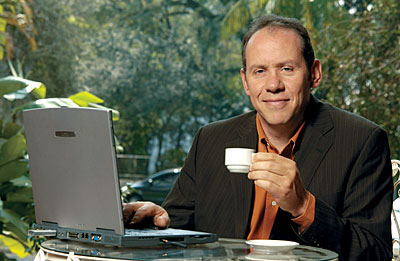
Semco Group Chief Executive Ricardo Semler at his impromptu office — a coffee shop near his company’s headquarters |
|
Photographs by Rogério Reis / Blackstar |
Mr. Semler, 46, is the leading proponent and most tireless evangelist of what has variously been called participative management, corporate democracy, and “the company as village.” As proposed 45 years ago in a book called The Human Side of Enterprise, by Douglas McGregor, one of the founders of the field of organizational development, participative management says that organizations thrive best by trusting employees to apply their creativity and ingenuity in service of the whole enterprise, and to make important decisions close to the flow of work, conceivably including the selection and election of their bosses. Underneath this is a view of human nature that Professor McGregor called “Theory Y,” which holds that ordinary people don’t have to be managed with the “carrots and sticks” of incentives and controls. Instead, people are naturally capable of self-direction and self-control, even in a corporate or bureaucratic setting, if they’re committed to the organization’s goal and if they are treated as mature adults who can learn from their actions and errors. Participative management has inspired a fiercely dedicated following, and many managers find it appealing and compelling in principle, but it is often dismissed as utopian and naive in the real world of conventional workplaces.
Even among the true believers, though, Mr. Semler is in a class by himself. His credentials as a thinker are impressive: He has gained a worldwide following as both a guest lecturer at Harvard Business School and MIT’s Sloan School of Management, and an author with a long list of bestsellers to his name. But what makes Ricardo Semler all the more notable is the way he has put theory into practice. Many people have talked the talk of corporate democracy; his company walks the walk.
In the last two decades, Semco, a maker of industrial machinery like giant oil pumps and restaurant dishwashers, has operated as a real-world laboratory for Mr. Semler’s radical approach to leadership. For the most part, the Semco experiment has been a huge success. An investment of $100,000 made in Semco 20 years ago would be worth $5.4 million today — a rare record of profitability that by all accounts stems directly from the participative management approach that Mr. Semler champions.
“I just wish that more people believed him,” laments Charles Handy, the British management guru and social philosopher. “Admiring though many are, few have tried to copy him. The way he works — letting his employees choose what they do, where and when they do it, and even how they get paid — is too upside-down for most managers. But it certainly seems to work for Ricardo.”
Mr. Semler’s Planet
To see Semco’s approach in action, just visit the company’s pump plant on the outskirts of São Paulo. This operation bears about as much resemblance to a traditional factory as the rainbow hues of its walls — the choice of the employees — do to industrial gray. Forget about foremen barking out orders to passive proles. On any given day, a lathe operator may himself decide to run a grinder or drive a forklift, depending on what needs to be done. João Vendramin Neto, who oversees Semco’s manufacturing, explains that the workers know the organization’s objectives and they use common sense to decide for themselves what they should do to hit those goals. “There’s no covering your ass,” says Mr. Neto. “The intent is to get straight to specific targets.”
Semco’s 3,000 employees set their own work hours and pay levels. Subordinates hire and review their supervisors. Hammocks are scattered about the grounds for afternoon naps, and employees are encouraged to spend Monday morning at the beach if they spent Saturday afternoon at the office. There are no organization charts, no five-year plans, no corporate values statement, no dress code, and no written rules or policy statements beyond a brief “Survival Manual,” in comic-book form, that introduces new hires to Semco’s unusual ways. The employees elect the corporate leadership and initiate most of Semco’s moves into new businesses and out of old ones. Of the 3,000 votes at the company, Ricardo Semler has just one.
In Mr. Semler’s mind, such self-governance is not some softhearted form of altruism, but rather the best way to build an organization that is flexible and resilient enough to flourish in turbulent times. He argues that this model enabled Semco to survive not only his own near-death experience, but also the gyrations of Brazil’s tortured politics and twisted economy. During his 23-year tenure, the country’s leadership has swung from right-wing dictators to the current left-wing populists, and its economy has spun from rapid growth to deep recession. Brazilian banks have failed and countless companies have collapsed, but Semco lives on.
“If you look at Semco’s numbers, we’ve grown 27.5 percent a year for 14 years,” says Mr. Semler over a cappuccino at one of São Paulo’s sidewalk cafés on a lovely fall day. He conducts many work-related conversations here; the ultimate hands-off leader, Mr. Semler doesn’t even keep an office at Semco. “Here’s why: Our people have a lot of instruments at their disposal to change directions very quickly, to close things and open new things.” Flexibility is the key, he says. “If we said there’s only one way to do things around here and tried to indoctrinate people, would we be growing this steadily? I don’t think so.”
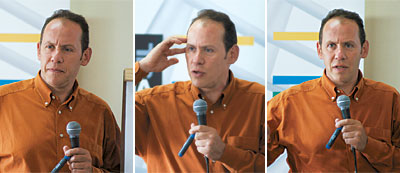
Those four words, “I don’t think so,” delivered with a Brazilian Portuguese lilt, represent Mr. Semler’s standard answer to corporate dogma, assertions that something he wants to do cannot be done, and even overly doctrinaire interpretations of the participative management concept. Mr. Semler is not a particularly self-effacing or humble advocate of human potential; his assurance in argument is legendary. In conversation, in teaching, and in his books Maverick (Warner Books, 1993) and The Seven-Day Weekend (Penguin/Portfolio, 2004), he puts forth participative management as not just a pragmatic path to business success, but also a healthy and enjoyable way of life. Mr. Semler has a law degree he has never used and no advanced business degree, but the success of his books and the entertainment value of his message have helped him become a frequent guest lecturer at Harvard Business School and MIT’s Sloan School. To executives and graduate students alike, Mr. Semler insists that his is not some quirky South American survival story, but a real-life lesson in making the work world work better.
To be sure, his message is not always well received, at home or abroad. “What planet are you from?” is one of the more polite questions Mr. Semler has fielded from Brazilian politicians. The Federation of Industries, representing Brazil’s corporate leaders, has publicly accused him of undermining managerial authority. The local business press has both lauded him with awards for progressive leadership and blasted him for letting Brazil’s powerful unions gain the upper hand. In response, he says that managerial authority is an illusion, and that since the influence of unions is a fact of life that isn’t going to go away, Semco is the stronger for engaging them rather than fighting.
Even in academic circles, usually more accepting of radical innovation, he’s met with some skepticism. “He has reified all these precepts from the early days of participative management, the ’40s,” says Warren Bennis, one of the most prominent scholars in the field of leadership and management, and an early protégé of Douglas McGregor. “Letting the employees elect officers to the company with periodic votes, almost like a true democracy — this is the most advanced, progressive, and, to my view, problematic way to practice participative management. There’s nobody else I can recall at the head of a company who has subjected himself so thoroughly to the most radical elements of that term.”
And while Mr. Semler is accustomed to commanding attention, he has no illusions about easily winning minds. “Semco is bucking not only the traditional business model, we’re resisting a code of behavior at the very core of Western culture,” he writes in The Seven-Day Weekend. “No wonder our ideals are hard for outsiders and other companies to embrace.”
The Family Maverick
In the reception area of Semco’s offices in the Jardim Marajoara district of São Paulo, visitors are greeted by a bronze bust of Antonio Curt Semler. The Austrian-born immigrant founded the company 50 years ago, initially to produce his patented vegetable oil centrifuge. By 1980, the company had evolved into a supplier of major equipment for shipbuilders, and today Semco offers a diverse range of products and services, from air conditioning components for office towers, to inventory management and environmental planning. The company also has joint ventures in such areas as building maintenance and mail processing with several multinational corporations, including Coldwell Banker, Pitney Bowes, and Johnson Controls.
At a casual glance, Semco’s headquarters look uncommonly tidy. The rooms are bright and airy, the walls decorated with contemporary Brazilian art. But noticeable by their absence are offices, administrative assistants, and even cubicles. Instead, there are workstation pods — round tables with four low dividers and network plug-ins for laptop computers. At any given moment, a gray-haired senior executive may share a pod with a couple of 20-something recruits fresh from school. Small conference rooms are set aside for private conversations, but most meetings are open to anyone, of any rank, who wishes to attend.
The bust of Curt Semler, as he is known, looks remarkably like his son Ricardo, and in turn like Ricardo’s 5-year-old son, Felipe. Curt Semler always intended to turn the company over to Ricardo, but the transition was not easy.
Ricardo hadn’t wanted to join the family business, preferring to ply his Gibson Les Paul in a series of striving São Paulo rock bands during the mid-1970s. But he tired of earning next to nothing playing one dank club after another. So in his late teens, Ricardo went to work at Semco. By age 20, in 1979, he had a lofty title as assistant to the board of directors, but he was frustrated that his responsibilities remained minimal, and his ideas for diversifying Semco were mostly ignored. Between 1975 and 1980, Semco’s operating earnings had evaporated as the Brazilian shipping industry, then its primary customer base, weathered a deep decline. Yet the company’s senior management refused to consider entering other businesses. The company limped along, its only earnings from investment income. Tired of fighting with his father and being condescended to by the old guard, Ricardo threatened to leave the company, and even initiated the acquisition of a business of his own.
Rather than watch his son walk away from his legacy, the elder Semler made a surprise move. In 1980, while Ricardo was in law school, Curt named 21-year-old Ricardo president and shortly afterward left on a long European vacation, saying only, “Do what you need to do.” When Semco’s senior executives insisted on waiting out the moribund shipping industry, Ricardo’s response was to fire 60 percent of top management in a single afternoon. The departing executives took a lot of company know-how with them, and frightened customers demanded their return, but Ricardo stood firm.
At the outset, the younger Semler’s change agenda had nothing to do with lofty ideals like participative management, and everything to do with jump-starting Semco’s stalled growth and returning the company to profitability. Toward that end, he hired a succession of get-tough managers and launched a series of strategic acquisitions, in areas like food-processing equipment, aimed at reducing the company’s dependence on the shipping business. Semco did grow, and rapidly. But the new emphasis on productivity and meeting ever more ambitious growth projections was a strain on the organization, steadily worsening employee relations and bringing Ricardo to the brink of physical collapse.
He was just 25 years old when he passed out during a visit to a pump factory in New York. A battery of tests identified the problem as acute stress and prompted Mr. Semler to think hard about his life and Semco. That’s when he had his epiphany: He had succeeded in diversifying the company, and stanching the flow of red ink, but it had become an unhappy place to work, and he had exhausted himself in the process.
“Semco appeared highly organized and well disciplined, and we still could not get our people to perform as we wanted, or be happy with their jobs,” he wrote later in Maverick. “If only I could break the structure apart a bit, I thought to myself, I might see what was alienating so many of our people. I couldn’t help thinking that Semco could be run differently, without counting everything, without regulating everyone, without keeping track of whether people were late, without all those numbers and all those rules. What if we could strip away all the artificial nonsense, all the managerial mumbo jumbo? What if we could run the business in a simpler way, a more natural way?”
During his convalescence, Mr. Semler devoured the works of Peter Drucker, Michael Porter, and Henry Mintzberg, searching for a solution. But his inspiration ultimately came from a more unlikely guru, the former principal of a small, progressive teachers’ school whom Brazil’s dictators had forced out for urging his faculty and students to question authority. After he was fired, Clóvis da Silva Bojikian had worked unhappily in executive training at Ford Motor Company’s Brazilian subsidiary and at KSB, one of Semco’s competitors in the industrial pump business, where his notions of self- governance, patterned after the “Summerhill” model of student-directed education, were not well received. When Mr. Bojikian answered Mr. Semler’s want ad for a director of human resources, the two talked late into the night, and Mr. Semler began to see how Semco could become a more humane organization without sacrificing growth and profits. At the heart of their conversation was the conviction that employees who participated in important decisions would naturally be more highly motivated and make better choices than those who simply followed orders from above.
“I could see the opportunity to do more innovative work here, inside an organization,” says Mr. Bojikian, 72, who is, under Semco’s policy of rotating leadership, currently chief executive. “We wanted to demonstrate that the workplace could be a place of satisfaction, not of suffering. Work should be a pleasure, not an obligation. But this wasn’t just some humanitarian thesis. We believed that people working with pleasure could be much more productive.”
Road to Participation
Resisting their impulse to transform Semco overnight, Mr. Semler and Mr. Bojikian started with small steps. Noting that the company cafeteria was the subject of endless complaints, they asked employees for help in improving it, and wound up turning over food service management to a group of the workers themselves. The complaints stopped. From this beginning, it was easy to move on to letting workers choose the color of their uniforms and the paint on the factory walls.
The next step was to address working hours. A city of 15 million people, São Paulo is prone to paralyzing traffic jams; the wealthy cope by commuting by helicopter. For Semco’s factory workers, an eight-to-five workday meant a long, unpredictable commute. The solution seemed obvious to Mr. Bojikian and Mr. Semler: Let the employees set their own hours, so they could all travel at nonpeak times. Skeptics within Semco’s management ranks said it would never work, that an assembly line could not function with flexible scheduling.
But the anticipated hiccups never happened. “People had many meetings to figure out the logistics of the new process, and when the day came, they had arranged that certain groups would be sure to be at the factory at the same time,” says Mr. Semler. “And they ended up having a core group arriving at approximately the same time, but it was the time that they wanted, not the time that we had scheduled. It is pointless and futile to spend your life doing something that is obviously incoherent or stupid based solely on the needs of the guy organizing it.”
Next, they let employees set their own compensation. This was a more complex process, which involved hiring an analyst to benchmark pay levels across multiple positions at 35 different companies. Average pay scales were established for comparable companies, to which Semco added 10 percent to help reduce employee turnover. And everyone’s salaries, from that of the security guard at the factory entrance to Mr. Semler’s own, were published for all to see. Peer pressure provided an efficient leveling mechanism.
Summarizing Semco’s transition to a democratic workplace — a process that took nearly five years — makes it sound smooth and seamless, but there were plenty of bumps and false starts.
“We experienced a very turbulent period,” recalls Mr. Neto, the manufacturing director who joined Semco in 1984 with the acquisition of Hobart Brazil. “We call it the watermelon truck. Imagine a truck full of watermelons, and you open the tailgate and all of them roll out. That’s what it was like when we started asking people what they wanted, what they liked and didn’t like. The company decided there were no taboos, they could ask anything, and the company books were open,” he says. “But it’s much easier to say than to do.”
Mr. Neto notes you can’t implement corporate democracy by half measures. “These practices cannot be adopted piecemeal, because they only work when everyone in the organization knows exactly how everything works,” he says. “Some companies here in Brazil tried doing bits and pieces of what we do, but it never goes anywhere.”
Semco’s top-to-bottom commitment to participative management has yielded a remarkable degree of unity that has carried the company through perilous times. In 1990, the kleptocratic government of Fernando Collor de Mello froze citizens’ bank accounts and seized their assets, plunging the country into a deep depression and forcing Semco to consider layoffs for the first time. “If you open up everything, including the company’s books and board meetings, you’ll find that the employees are honest, responsible people. Our employees understood the situation, and they knew we could not keep everybody. They themselves came up with the names” to cut, says Mr. Neto. “Most of our competitors in capital goods disappeared, and I’m sure that our culture was the bonding factor that kept us alive during that time and keeps us going now.”
Habits of Thought
How Semco built that culture became the subject of Mr. Semler’s first book, Turning the Tables, published in 1988, which spent four years on the Brazilian bestseller lists. Expanded and rewritten in Mr. Semler’s own English as Maverick, the book was translated into 29 languages and sold more than 1 million copies worldwide. Although Ricardo Semler the bon vivant had long been a boldfaced name in Brazilian newspaper gossip columns, by 1995 he commanded an international audience as an improbable business guru. His obvious warmth and humor still draw listeners in, even when his message contradicts everything they believe they know.
In speeches at management conferences, he often suggests that he can write the five-year plan for any company in that many minutes. “It says we will grow 5 percent this year, 10 percent the next, and 15 the year after that. Have you ever seen one that says we’ll grow 5 percent this year, then we’ll have a big loss, then we’ll be merged?” he asks. “I don’t think so.”
Or he may ask the assembled CEOs to write their corporate values down on a small piece of paper, in simple block capitals. During a break, he gathers the papers, shuffles them, and redistributes them at random. When the executives return, they find that the lists are nearly all identical, but for minor differences in order. That’s when Mr. Semler goes in for the kill: “Did anyone write that we’re going to make products that last only until the warranty expires, or that we’re going to discriminate against women and minorities, but only when we won’t get caught? I don’t think so.”
Then Mr. Semler segues into his perennial theme: the habits of thought that can change rigid, dehumanizing workplaces into engaging, productive ones. As he writes in The Seven-Day Weekend, “Our ‘architecture’ is really the sum of all the conventional business practices we avoid.” Consider, for example, typical employee recruitment.
“It is like Internet dating,” says Mr. Semler. “I’m always six foot, four inches, and I look like Brad Pitt; you are always Cindy Crawford or Angelina Jolie. In the recruitment process, we put out fraudulent stuff about the company, like we’re going to double our earnings, leaving out that we’re also transferring all production to Vietnam in a year. You forget to tell us that you have fits of rage, that you worked six months here, six months there, and it’s not on your resume. Then we meet at a bar and decide to marry. What are the chances that is going to work?” he asks.
At Semco, by contrast, “We put out ads that are realistic,” says Mr. Semler. “We don’t have an HR department, so the person who has the opening will take the stack [of applications] and distribute it for review. We wind up with a group of 35 people in a room, 15 of whom are candidates. When that conversation ends, our people will pick three for further interviews. They’ll come back several times. By the time we decide to marry, we know a lot about these people. That leaves us with 2 percent turnover in an industry with 18.”
The CEOs and Sloan fellows who attend Mr. Semler’s classes listen attentively, chuckle at the right moments, and take careful notes. But it’s not clear what they take away from these encounters. “When he talks, it’s a bit of smoke and mirrors,” says Bruce McKern, director of the Sloan master’s program at Stanford University’s Graduate School of Business. “He challenges just about every shibboleth of corporate management, but it happens so quickly you’re not quite sure what he has in place to replace them.”
Mr. Semler has heard this before. “Bruce saw a 30-minute presentation, meant indeed to provoke — not much more can be done in such a short time. Of course the full Semco story has dozens of cases and examples that back the theories up.” In addition, if you ask Mr. Semler about the sources of his ideas, you will hear about such stalwarts of management innovation as Joseph Scanlon (whose “Scanlon plan,” developed in the 1950s, involved labor unions in the governance of factories and made them accountable for results) and Wilbert L. Gore (whose company, Gore-Tex, has operated on participative principles since its founding, in 1958). The reading list in Mr. Semler’s MIT courses includes work by Franz Kafka and Gabriel García Márquez. The most appealing aspect of the Semler theory and practice is the part that once seemed most threatening to conventional management: the embodied view of managers and workers as whole human beings, seeing life and work entwined in mutual commitment.
Ricardo Semler and his associates at Semco have gone even further than Mr. Gore in throwing away titles, rules, and institutional control, and what has emerged is a company that truly lives by its leader’s precepts. With remarkable consistency, people describe Mr. Semler as a hands-off leader, fascinated by bold strategic moves but uninterested in implementation. It is a good thing, they say, that Semco’s participative management — and the presence of a half dozen veteran leaders — allows it to be largely self-governing, because Mr. Semler is hardly ever there. “He doesn’t like the day-to-day thing,” says Mr. Neto, the operations manager. “He gets bored easily.”
Still, Mr. Semler worries that he remains too influential. Although it’s been a dozen years since he’s had a desk at Semco and there are plenty of other people at the company who have check-signing authority, major decisions are often deferred until he returns from one of his many trips, and few big deals are closed without his presence.
That’s the price, he concedes, of his personal magnetism. “At the company, no matter what you do, people will naturally create and nurture a charismatic figure,” Mr. Semler says. “The charismatic figure, on the other hand, feeds this; it doesn’t just happen, and it is very difficult to check your ego at the door. The people at Semco don’t look and act like me. They are not yes-men by any means. What is left, however, is a certain feeling that has to do with the cult of personality. They credit me with successes that are not my own, and they don’t debit me my mistakes. They give undue importance to what I say, and I think that doesn’t go away.”
That doesn’t mean he always gets his way. Recently he and Mr. Bojikian lobbied for a potential recruit with many years of relevant experience, only to be outvoted by younger members of Semco’s board who preferred a less seasoned candidate closer to their own age. Mr. Semler doubts the young man will succeed, but he went along with the decision for the good of the Semco system of participative management.
“By having so much stock, I have a loaded gun, but in 25 years I’ve never used it because you can only use it once,” Mr. Semler says. “If I veto someone, the next time they’re going to say, ‘Forget it; he’s going to do what he wants.’ They have to go through processes where they know they’re going to prevail.”
Of course, Mr. Semler’s ownership stake is a big reason that he is able to implement his managerial principles at all, and maintaining those principles is the primary reason Semco has never had a public stock offering. Also, with $240 million in revenues and 3,000 employees, Semco is a relatively small company. But much of Semco’s growth and diversification in recent years has come through joint ventures with multinational corporations, most of which are publicly traded. Despite Mr. Semler’s best intentions, these entities tend to practice a diluted version of the democratic workplace.
“I don’t know that any American company could operate under his beliefs,” says Dan Sheffield, executive vice president of RGIS Inventory Specialists of Auburn Hills, Mich., which has a joint venture with Semco to service clients in South America, including Wal-Mart. Even in Brazil, “I’m not sure the supervisors walk the walk as thoroughly as Ricardo thinks they do. I’m sure Ricardo wants it that way, and probably has everything in place, but the people under him are maybe not as trusting as he is. Everyone would love to work in an organization like that, but how do you get there? The only way is for the company to have complete trust in you. We make them earn it first; we don’t assume the trust,” he says. “Ricardo takes pretty big leaps of faith.”
Participative Philanthropy
Because there are limits to the leaps of faith that any for-profit enterprise can undertake and because he’s only involved with Semco to a limited extent these days, Mr. Semler has poured his energies into a philanthropic foundation, a think tank, a grade school, and an eco-resort. All are laboratories for further exploring what is possible when leaders relinquish control and allow rational people to pursue their goals unfettered by established rules and procedures.
In each case, Mr. Semler plays the catalyst, while surrounding himself with people who have often given up more exalted positions elsewhere to work with him. Their job is to implement the impractical.
Mr. Semler’s latest brainstorm is Hotel Botanique and Habitat dos Mellos, an upscale eco-resort and botanical garden, which is being built about 125 miles northwest of São Paulo in Bairro dos Mellos, a destitute village where unemployment had hit 38 percent. Scheduled to open in late 2006, the project is a study in contradictions, with all the luxuries essential to an international destination resort, but rigorously natural, with no televisions, no air conditioning, and exclusively locally grown, organic produce in its resolutely French restaurant. Guests will be among the world’s wealthiest, and most jaded, clientele, but Mr. Semler is committed to staffing the hotel with indigenous people drawn from the neighboring village.
What makes this enterprise pure Ricardo Semler is the democracy of its management structure. The trickiest part is his insistence that each guest feel that he or she is staying at a small inn and being served by the owner. An avid traveler, Mr. Semler believes even the best hotels make guests work too hard. He intends to empower every hotel staffer to answer any wish at any time. If you’re a guest and you want to go mountain biking, you won’t have to call the activities desk to arrange it; you can just ask the nearest employee.
At a meeting of his leadership team, consultants from Cornell University’s School of Hotel Administration and the Ecole Hôtelière de Lausanne do their best to explain why a traditional structure is still essential. Mr. Semler listens attentively and then poses a question: “Why does anything have to be done the way it’s always been done?”
Later, Basilio Jafet, the hard-nosed real-estate developer brought in by other dos Mellos investors to keep Mr. Semler from losing all their money, confesses that he too finds the Semler ideas unexpectedly persuasive. “I was very skeptical, but I’m being transformed,” he says. “Ricardo is not only charismatic, but very coherent in his ideas. He’s against all common sense, but amazingly he’s right and we are all wrong.”
Mr. Semler’s approach to dealing with São Paulo’s enormous number of homeless children is just as iconoclastic. He quietly pays the tuition of several needy youngsters at the Lumiar School, an experimental institution founded and funded by the Semco Foundation. “Whatever I do in terms of philanthropy, I do anonymously,” says Mr. Semler. “I give to projects I don’t control at all.”
And they all function on the same democratic model that Semco uses. Thus the director at Lumiar’s pilot school in São Paulo is a lively young woman named Lilian Kelian, with no background in education. Mr. Semler voted against her. “The parents wanted Lilian, so Lilian’s the new director,” he says. “The person we were backing had 20 years’ experience as a school director. But the parents were more interested in the mind-set, the drive, and the belief system. And Lilian has a lot of qualities. She knows we lobbied against her, but now we work together and off we go.”
Asked why true participative management is still such a rarity, Mr. Semler cites two elements that he says are in sadly short supply: “One, the people in charge wanting to give up control. This tends to eliminate some 80 percent of businesspeople. Two, a profound belief that humankind will work toward its best version, given freedom; that would eliminate the other 20 percent,” he says.
Meanwhile, Semco has made Mr. Semler and some of its other senior employees wealthy, and has given a few thousand more families a solid middle-class income in a country where the norm is masses living in desperate poverty and a tiny elite living with extraordinary wealth. Mr. Semler says he no longer worries about Semco surviving without him, and, unlike his own father, he has no intention of passing the company on to his son. And although he wants his ideas to be heard, he knows they are still an affront to most corporate leaders. “Semco is on the fringe of business thinking, which tends to be very conservative, by nature and design,” he says. “Rethinking ways of doing business will rarely be popular or easily adopted. But we like it our way, and hope that we will sow some seeds out there.”
Reprint No. 05408
What is the Future of the Workplace?
http://www.strategy-business.com/article/00257
Thomas Malone on Building Smarter Teams
The head of MIT’s Center for Collective Intelligence explains how the social intelligence factor is critical for business success.
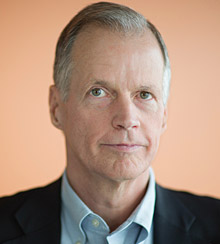
Photograph by Bryce Vickmark
What if you could measure the intelligence of a group? What if you could predict which committees, assigned to design a horse, would end up with a camel, versus which would develop a thoroughbred—or a racecar? The MIT Sloan School of Management’s Center for Collective Intelligence (CCI) was set up to accomplish just that sort of evaluation. Under the leadership of its founding director, Thomas W. Malone, the center’s ambition is to put forth a new theory of group performance, bringing together insights from social psychology, computer science, group dynamics, social media, crowdsourcing, and the center’s own experiments in group behavior. The results could help business teams produce more thoroughbreds and fewer camels.
Malone is the Patrick J. McGovern Professor of Management at the MIT Sloan School and a key figure in organizational learning and design studies. Formerly a research scientist at Xerox Palo Alto Research Center (PARC), he holds 11 patents, largely in user interface design and the representation of complex processes in software. Like other technologists (one thinks of the late computer interface pioneer Douglas Engelbart), Malone grew interested in the ways that organizational design and computer systems design could augment each other. His book The Future of Work: How the New Order of Business Will Shape Your Organization, Your Management Style, and Your Life (Harvard Business School Press, 2004) proposed that in an increasingly networked world, strict hierarchies would be less viable. The book also foreshadowed the decentralized “bottom-up” management model that has influenced companies like Zappos.
Why Women Make Teams Smarter
MIT professor Thomas Malone discusses why women can increase a group’s collective intelligence.
Malone set up CCI in 2006, drawing together a group of management scholars, neuroscientists, and computer scientists (some of whom, including Alex “Sandy” Pentland, Erik Brynjolfsson, and Pattie Maes, have been featured in our pages). Tim Berners-Lee, Jimmy Wales, and Alpheus Bingham—the progenitors of the World Wide Web, Wikipedia, and the crowdsourcing platform InnoCentive, respectively—make up the center’s advisory board.
CCI’s most provocative finding so far is that, by and large, the higher the proportion of women on a team, the more likely it is to exhibit collective intelligence (and thus achieve its goals). This research was originally published in Science (“Evidence for a Collective Intelligence Factor in the Performance of Human Groups,” by Malone and Carnegie Mellon assistant professor Anita Williams Woolley et al., Oct. 2010) and highlighted in April 2013 in a Harvard Business Review interview with Malone and Woolley. The critical factor appears to be social perception. Women are, on average, more perceptive than men about their colleagues. Social perceptiveness is a kind of social intelligence; it’s the ability to discern what someone is thinking, either by looking at their facial expression or through some other means of human observation. When it comes to the effectiveness of groups, we are what we see in each other. And if this kind of acumen can be learned, Malone’s research suggests that the performance of teams (and companies) can be dramatically improved.
In December 2013, Malone met with strategy+business at MIT’s Sloan School in Cambridge, Mass. He talked about the origins of his research, the comprehensive study he conducted with about 150 groups, and the implications for individuals, teams, and large-scale enterprises.
S+B: How did your work on measuring collective intelligence get its start?
MALONE: As codirector of the MIT project “Inventing the Organizations of the 21st Century,” I did a lot of thinking about how new technologies would change the ways work is organized. In The Future of Work, I suggested that cheap communications would lead to much more human freedom and decentralized decision making in business. After that, I considered following up with another book about how to implement these ideas, and what companies were actually making them work. But the more I thought about it, the more I became convinced that I should look instead at what was coming next: the evolution of management beyond decentralization.
Case Studies: Managerial Relationships
A Case Study – a simple case of workplace bullying
A Case Study – a simple case of workplace bullying
A situation came to my attention yesterday morning and I thought it worthy of a case study on the blog, with some added questions for you. Sorry it is a bit longer than usual.
“How can something that appeared so minor have been blown so far out of proportion”, I was asked by a prospective client. What was, in the first instance, one small comment to a member of staff and a well respected manager has been put in the dock with accusations of bullying and abrasive management. Her whole career is in the balance. How can this have been allowed to happen?
So many times I have seen situation like this get out of hand. It’s amazing how quickly people turn on a manager who has hitherto been considered an organisational and team asset.
Let’s call this woman Jenny. She has been in post for thirteen years and is manager of a large sales department with in excess of a hundred staff in six teams; a fairly senior manager. Her team leaders are her direct reports and have, between them, a total of 45 years under her management; mostly they know each other well and have always got along fine.
At the end of last year a new team leader joined the department. He came in very energetically and performed really well during his first weeks in post. However, about two months ago, during a regular supervision session, he told Jenny that he had not appreciated the way she spoke to him during his induction period. She was somewhat confused as no-one had ever made such a comment to her before. She enquired into the specifics of his allegation and was told that she had been abrupt and sometimes a little dismissive of him; on one occasion he found himself feeling humiliated at a team meeting.
She apologised if she had caused offence and said she would be more careful in future, recognising that he was quite sensitive. The following week Jenny was called to the director’s office and was told that a grievance had been taken out against her and HR were investigating the claim made by another member of the team that she has been treated disrespectfully. She could not think what this related to.
During the next two weeks HR spoke to each of the team leaders canvassing their views on Jenny’s management style. It appeared that after so many years of successfully working together, she was suddenly being branded a bullying manager. How could this have happened? Finally, it was established that it had been a simple hand gesture towards a team leader had caused the grievance; Jenny had waved her out of her office because she was on a confidential phone call; the gesticulation was adjudged to have been aggressive.
Within a few days, her style of management was questionable. Each member of team came up with past situations they had viewed as “just the way Jenny did things” and had accepted them at the time. Now, with HR intervention, the same situations were being regarded as bullying. After asking for specific situations, HR now had a catalogue of managerial errors questioning Jenny’s leadership.
So what caused this to happen? Was the catalyst the new member of staff, or had Jenny really changed? Was she less tolerant or more demanding than previously – probably not – just open to greater scrutiny. What was it about how she presented herself at work, or the relationship she had with her team members, that could have contributed to her problems.
What was evident was that something in Jenny’s management style needed to be addressed. Through a “Working with Difference” coaching programme she is going to explore her management style, aiming to develop a greater awareness of the impact her management behaviour can have on team members. She will examine how she copes with the power she has over her staff.
Management is not an easy place to be and can be quite lonely. Learning to deal with personal power is difficult and complex and can be more problematic than managing staff. Indeed, until the power imbalance within managerial relationships is fully addressed and understood by all parties, this kind of scenario could easily occur – in any organisation, maybe even yours. Organisational power is generally unrecognised as an equality issue – but power and inequality and not easily separated.
So, the question is, how are you doing in your managerial relationships? Is your behaviour always correct, or is a catalogue of your errors being stored by your staff, waiting to be exposed at a later date. Could a situation arise between you and your manager or your reports that could end up in dysfunctionality or a complete breakdown? I think it’s worth looking in to, don’t you?
As a postscript, I am sure with the early intervention and support from HR, Jenny and her team will be OK!
See comments (4)